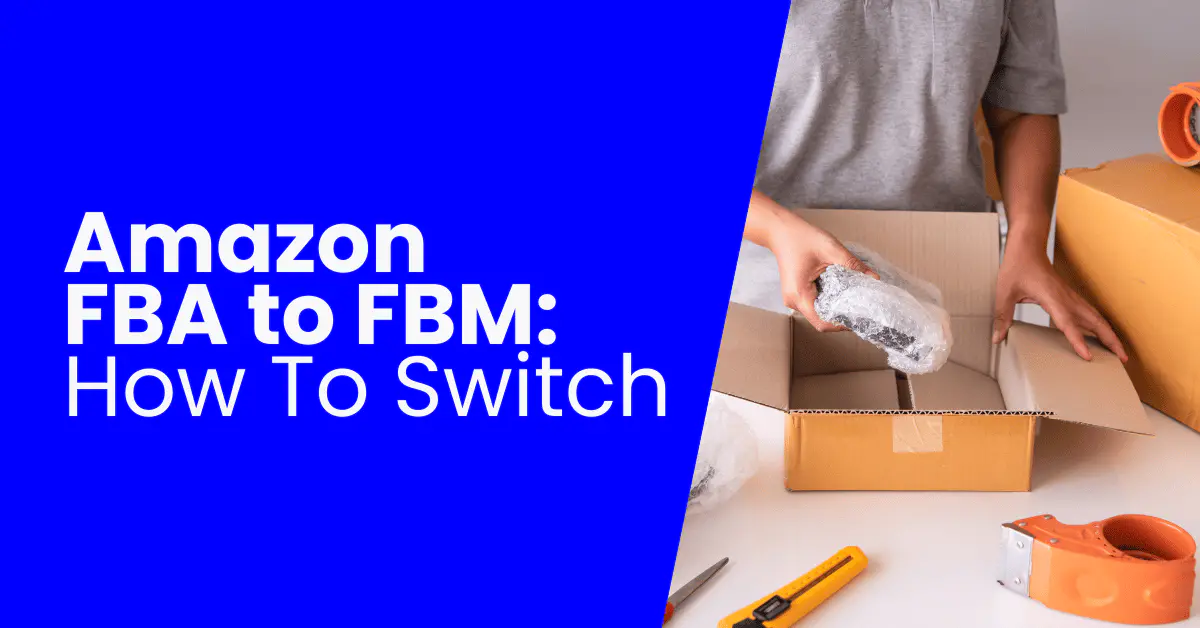
- Amazon FBM (Fulfilled By Merchant) allows sellers to list products on Amazon while retaining direct control over storage, fulfillment, parcel shipping, and customer support.
- FBM serves as a powerful standalone operational model or an essential fail-safe backup to prevent stockouts on FBA inventory.
- Mastering shipping templates, valid tracking rates (VTR), and carrier integrations protects account health and preserves Buy Box competitiveness.
Amazon FBM (Fulfilled by Merchant) can feel operationally demanding for brand leaders, particularly those transitioning from FBA or scaling multi-channel logistics.
Managing shipping templates, dispatch lead times, and carrier tracking uploads requires strict operational control to prevent performance defects.
Shipping and fulfillment workflows represent critical leverage points for brands of all sizes. As an eCommerce Fractional CMO, I help organizations structure self-fulfillment operations to protect gross margins, maintain account health, and maximize Buy Box ownership.
What is Amazon FBM?
Amazon Fulfilled by Merchant (FBM) is a fulfillment model where the seller handles product storage, order packing, delivery, and customer service directly rather than routing inventory through Amazon fulfillment centers.
FBM serves as the primary operational alternative to Amazon FBA (Fulfilled by Amazon). Brands execute FBM internally through owned warehouse facilities or by partnering with third-party logistics (3PL) providers.
Sellers utilizing FBM can offer custom delivery options and free shipping thresholds across search placements:
Additionally, sellers who meet stringent operational SLAs—such as zero-day handling and nationwide 2-day delivery—can earn Prime badge display through Amazon Seller Fulfilled Prime (SFP).
How Does Amazon FBM Work?
Under the FBM model, products are listed on the Amazon Marketplace. When a customer places an order, your internal logistics team or 3PL partner picks, packs, and dispatches the parcel directly to the end consumer.
The merchant must confirm shipment and upload valid tracking data into Seller Central within the designated handling window to maintain account standing.
How To Get Started with Amazon FBM:
- Establish a Professional Seller Central account.
- List catalog items and assign fulfillment settings to Merchant.
- Configure warehouse dispatch origins and return address locations.
- Build customized shipping templates defining transit regions and delivery fees.
- Establish compliant return and refund policies inside Seller Central.
- Execute daily order pick, pack, and carrier handoff workflows.
- Upload carrier tracking numbers promptly upon order dispatch.
Sellers purchasing postage through Amazon Buy Shipping access pre-negotiated carrier rates (including UPS and USPS) while gaining automated account protection against item-not-received claims.
Pros & Cons of Amazon FBM
Deploying FBM delivers distinct strategic advantages depending on your business model:
- Multi-Channel Brands: Enables centralized inventory management across direct-to-consumer websites and wholesale channels using unified 3PL stock.
- Emerging Sellers: Allows new brand launches to enter the marketplace rapidly without waiting for inbound FBA warehouse receiving queues.
- Enterprise Accounts: Serves as an automated backup SKU strategy to capture orders seamlessly during FBA stockouts or capacity limit caps.
Pros (Strategic Advantages)
- Branded Unboxing: Ship orders using custom branded packaging, inserts, and marketing collateral.
- Lower Storage Overhead: Eliminate restrictive FBA monthly and aged inventory storage surcharges.
- Reduced Unit Handling Fees: Avoid per-unit FBA pick-and-pack fee structures on oversized or heavy products.
- Centralized Stock Control: Maintain unified inventory visibility across all sales channels.
Cons (Operational Demands)
- Buy Box Sensitivity: Requires precise pricing and fast shipping to compete against FBA Prime listings.
- Internal Labor Burden: Brand assumes direct responsibility for daily order picking, packing, and dispatch.
- Customer Service SLA: Internal teams must manage buyer inquiries, delivery issues, and return processing.
- Transit Risk: Seller absorbs financial responsibility for damaged or lost transit shipments.
Amazon FBM Fees
Unlike FBA, FBM eliminates per-unit fulfillment fees and storage surcharges paid to Amazon, replacing them with standard account and referral fees:
Pro Seller Subscription Fee:
$39.99 per month for professional selling privileges.
Per-Item Fee:
$0.99 per unit sold (waived automatically under the Professional Selling Plan).
Amazon Referral Fees:
| Product Category | Typical Referral Fee Percentage |
|---|---|
| Most Major Categories (Home, Kitchen, Sports, Toys) | 15% of total sales price |
| Apparel & Accessories | 17% of total sales price |
| Consumer Electronics & Tech Accessories | 8% to 15% depending on price thresholds |
| Beauty, Health & Personal Care | 8% (items under $10) / 15% (items over $10) |
Frequently Asked Questions
What is FBM on Amazon?
Amazon Fulfilled by Merchant (FBM) is a fulfillment model where the merchant or a designated 3PL manages product storage, order packing, delivery, and customer support directly instead of utilizing Amazon fulfillment centers.
Which is Better Amazon FBA or FBM?
Amazon FBM is preferable if:
- You sell heavy, bulky, or oversized products with high FBA handling surcharges.
- You maintain an established, cost-effective 3PL or warehouse fulfillment system.
- You want direct control over custom unboxing, inserts, and customer touchpoints.
- Your catalog experiences lower turnover velocity or long-tail sales cycles.
Amazon FBA is preferable if:
- Your products are small, lightweight, and high-velocity.
- You want automated Prime badge inclusion to maximize Buy Box conversion rates.
- You prefer Amazon to manage customer support, returns, and logistics operations completely.
Does Amazon FBM Cost Money?
Yes. FBM costs include the monthly Professional Seller account fee ($39.99/mo), category referral fees (typically 8%–17%), and outbound carrier shipping expenses paid directly to postage providers.
Who Pays For FBM Shipping?
The seller pays carrier postage costs directly. While sellers can configure custom buyer shipping charges on FBM templates, offering free shipping is strongly recommended to preserve Buy Box competitiveness and search conversion.
Can I Switch From FBM To FBA?
Yes. Fulfillment settings can be changed at the SKU level at any time. Sellers can also maintain active dual SKUs under the same ASIN—one configured for FBA and one for FBM—to prevent stockouts.