Key Takeaways
- Amazon Seller Fulfilled Prime (SFP) enables merchants to fulfill orders independently from self-managed facilities while securing Prime badge eligibility on product listings.
- SFP qualification requires completing a 90-day trial period, fulfilling at least 200 orders while maintaining a 99%+ on-time shipment rate and 95%+ usage of Amazon Buy Shipping.
- SFP offers full control over inventory management and packaging, making it ideal for oversized, hazmat, or temperature-sensitive products where FBA storage fees compress net margins.
Competing against FBA listings while fulfilling orders via standard Merchant Fulfillment (FBM) presents a severe conversion handicap on Amazon.
Because Prime subscribers filter search feeds exclusively for Prime-eligible offers, merchant-fulfilled listings often suffer from suppressed click-through and conversion rates.
Amazon Seller Fulfilled Prime (SFP) solves this challenge by allowing merchants to display the Prime badge on self-fulfilled listings while maintaining complete operational control over warehouse fulfillment.
This comprehensive guide details the operational requirements, fulfillment SLA benchmarks, and strategic trade-offs of Seller Fulfilled Prime under the direction of an eCommerce Fractional CMO.
What is Seller Fulfilled Prime (SFP)?
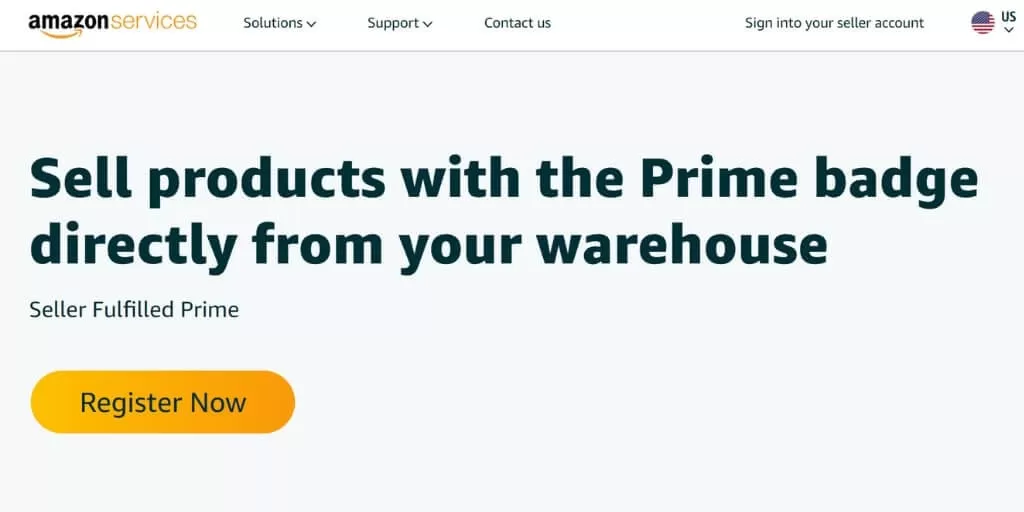
Amazon Seller Fulfilled Prime (SFP) is an official fulfillment program allowing Professional Seller Central merchants operating via Amazon FBM (Fulfilled By Merchant) to display the Prime badge on product listings by committing to nationwide 1-day and 2-day delivery SLAs.
Under standard Amazon FBA (Fulfillment By Amazon), sellers ship bulk inventory into Amazon’s fulfillment centers, where Amazon picks, packs, and dispatches customer orders.
Under SFP, inventory remains inside your warehouse or specialized 3PL network. When an order generates, your warehouse staff dispatches the shipment directly to the consumer while meeting Amazon’s strict Prime delivery standards.
Comparing FBA vs. Seller Fulfilled Prime Workflows:
| Fulfillment Workflow | Fulfillment By Amazon (FBA) | Seller Fulfilled Prime (SFP) |
|---|---|---|
| Inventory Location | Amazon Fulfillment Centers nationwide. | Merchant-owned facility or nationwide 3PL network. |
| Prime Badge Display | Automatic upon FBA inventory receiving. | Granted upon passing the 90-day SFP performance trial. |
| Order Pick & Pack | Managed automatically by Amazon warehouse staff. | Managed directly by merchant or 3PL warehouse staff. |
| Customer Service & Returns | Managed 100% by Amazon Customer Support. | Amazon manages post-purchase messaging; seller processes returns. |
| Storage Surcharge Risk | Subject to monthly and aged inventory surcharges (IPI Score). | Zero Amazon warehouse storage fees applied. |
For brands seeking to switch from FBA to FBM without forfeiting Prime conversion advantages, SFP represents the primary logistics mechanism.
What Are The Seller Fulfilled Prime Requirements?
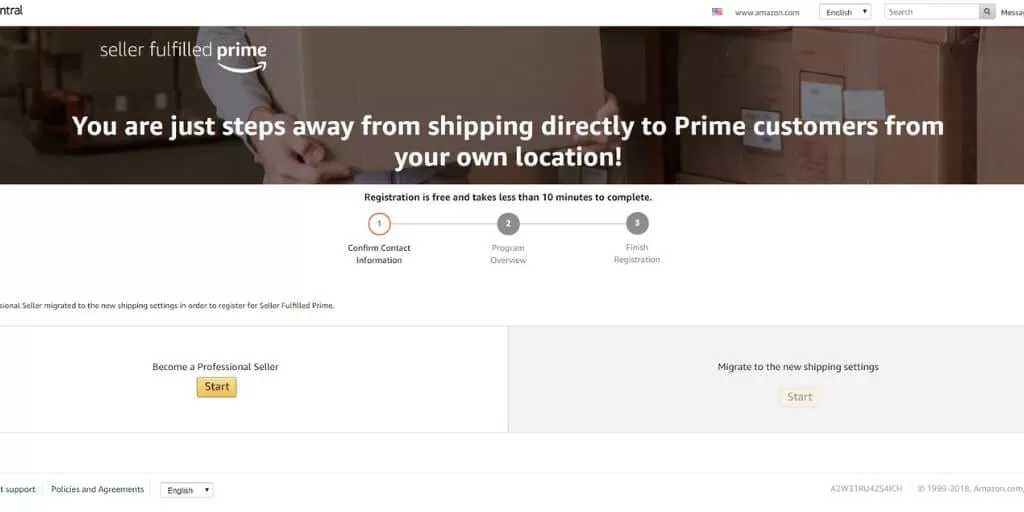
Enrolling in Seller Fulfilled Prime requires completing a mandatory 90-day trial period while hitting strict operational benchmarks:
| SFP Performance Metric | Mandatory Program Requirement |
|---|---|
| Trial Duration & Volume | Complete a 90-day trial period fulfilling a minimum of 200 Prime-eligible orders. |
| On-Time Shipment Rate | Maintain a minimum 99.0% on-time shipment rate on all Prime orders. |
| Buy Shipping Service Usage | Purchase shipping labels via Amazon Buy Shipping Services for at least 95.0% of orders. |
| Seller Cancellation Rate | Maintain a pre-fulfillment order cancellation rate below 0.5%. |
| Nationwide Delivery Coverage | Offer free 2-day delivery across 100% of the contiguous United States (Lower 48 states). |
| Weekend Operations | Maintain warehouse operations and carrier pickups on 6 days per week (including Saturday or Sunday). |
Trial Performance Rules:
- Failing SLA Benchmarks Reset the Clock: If your fulfillment metrics drop below trial thresholds during the 90-day window, the trial resets to Day 0.
- Volume Thresholds: Failing to generate 200 orders within 90 days resets the trial window. Scaling sales velocity via Amazon Listing Optimization, rich A+ Content, and targeted ads accelerates trial completion.
SFP Same-Day Shipping Cutoff & Weekend SLAs
SFP rules enforce strict order processing cutoffs. The standard same-day dispatch cutoff time is 2:00 PM local warehouse time.
Orders received before 2:00 PM must be picked, packed, and scanned by the carrier on the same business day.
SFP Order Cutoff & Delivery SLA Schedule:
| Order Day & Time Window | Required Same-Day Shipping Action | Target Customer Delivery SLA |
|---|---|---|
| Monday – Wednesday (Before 2:00 PM) | Dispatch same day via 2-day carrier service. | Wednesday – Friday (2-Day Delivery) |
| Thursday (Before 2:00 PM) | Dispatch same day via 2-day carrier service. | Saturday or Monday Delivery |
| Friday (Before 2:00 PM) | Dispatch same day via weekend-capable carrier service. | Monday or Tuesday Delivery |
| Weekend (Saturday / Sunday Window) | Must maintain Saturday or Sunday carrier pickups. | Tuesday or Wednesday Delivery |
Approved Carriers Supporting SFP Weekend Pickups:
| Carrier Network | Saturday Pickup Support | Sunday Pickup Support |
|---|---|---|
| United Parcel Service (UPS) | Full Network Support | Regional Network Support |
| FedEx Express / Ground | Full Network Support | Select Regional Networks |
| United States Postal Service (USPS) | Full Network Support (Priority/Express) | Limited Regional Hubs |
| Amazon Logistics (AMZL) | Full Network Support | Full Network Support |
How Seller Fulfilled Prime Returns Work
Customer return processing for SFP orders operates under automated rules aligned directly with FBA policies.
Automated Return Authorization & Shipping Label Allocation:
Return authorization requests generate automatically. Amazon dispatches prepaid return shipping labels to buyers, deducting return costs based on standard fault classification rules:
| Merchant Pays Return Shipping When: | Customer Pays Return Shipping When: |
|---|---|
| Item arrives damaged, defective, or broken. | Accidental purchase or buyer change of mind. |
| Carrier misses guaranteed delivery SLA. | Better price found on an alternate channel. |
| Incorrect product or SKU variation shipped. | Product no longer needed or wanted. |
| Product detail page description was inaccurate. | Incompatible sizing ordered by buyer. |
Category Rule: Amazon rules mandate free customer return shipping across Apparel, Shoes, Jewelry, Luggage, Baby Products, and Watches regardless of return reason.
Is Seller Fulfilled Prime Worth It?
Displaying the Prime badge on product detail pages fundamentally alters search conversion dynamics:
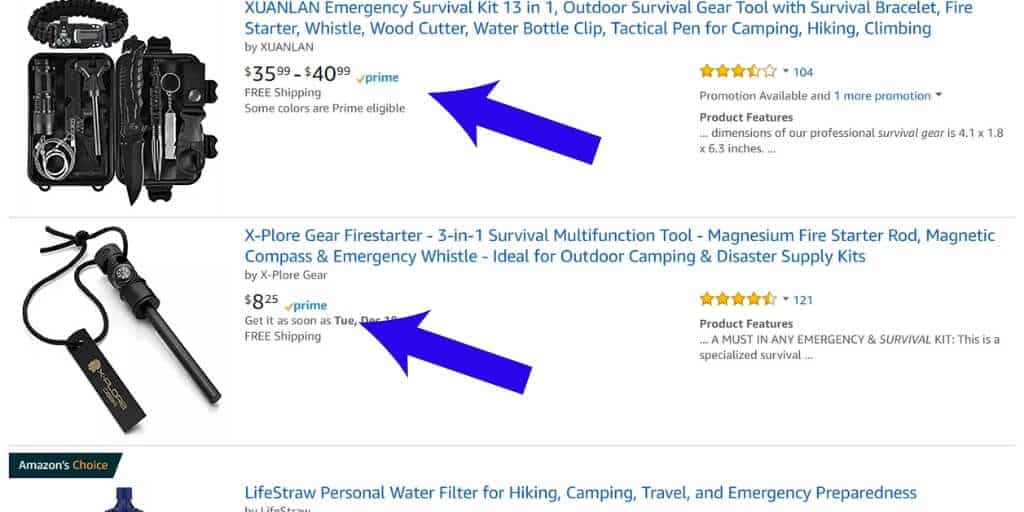
Prime badging captures immediate shopper trust, elevates click-through rates (CTR), and secures higher unit session conversion percentages across search feeds.
Strategic Scenarios Where SFP Delivers Maximum ROI:
- Oversized or Heavy Products: Large or heavy products incur severe FBA dimensional weight surcharges and storage fees. SFP leverages ground regional shipping networks to cut fulfillment costs.
- Temperature-Sensitive or Hazmat Items: Goods requiring climate-controlled storage (e.g., meltable chocolates, specialized cosmetics, or hazmat items) that Amazon fulfillment centers restrict or reject.
- High-Value / Slow-Moving SKU Catalogs: Premium goods with longer inventory holding windows where FBA monthly storage surcharges compress margins.
- Multi-Channel Distributed Inventory: Brands utilizing centralized 3PL infrastructure to fulfill Shopify, B2B, and Amazon orders from unified inventory pools.
How SFP Accelerates Marketplace Sales:
- Securing SFP grants instant Prime badging across self-fulfilled inventory.
- Prime badging increases detail page click-through and conversion rates.
- Higher conversion rates increase Featured Offer (Buy Box) win percentages.
- Increased sales velocity boosts organic keyword search placements (Amazon SEO).
- Higher conversion rates lower ad acquisition costs (Reduce ACoS).
Seller Fulfilled Prime Pros and Cons
SFP Operational Advantages (PROS)
- Prime Badge Conversion Power: Captures Prime-exclusive search filter traffic and increases CTR.
- Eliminates FBA Storage Surcharges: Avoids monthly storage fees, Peak surcharges, and aged inventory fees.
- Unified Inventory Control: Consolidates multi-channel inventory inside brand-controlled facilities.
- Preserves Custom Packaging: Allows inclusion of branded inserts, tissue, and customized unboxing (How To Get Reviews on Amazon).
SFP Logistics Challenges (CONS)
- Expensive Air Shipping Costs: Fulfilling nationwide 2-day SLAs from a single warehouse requires expensive air freight.
- Strict Operational Rules: Missing 99% on-time shipment or 95% Buy Shipping SLAs risks program suspension.
- Weekend Labor Mandates: Requires operating 6-day warehouse packing shifts (Saturday/Sunday dispatches).
- Automated Return Costs: Amazon auto-authorizes returns using merchant funds.
Meeting SFP Network Requirements via Distributed 3PLs
Fulfilling nationwide 2-day delivery SLAs from a single warehouse location requires expensive expedited air shipping services that erase gross product margins.
To execute SFP economically, brands partner with nationwide distributed fulfillment networks (such as Ware2Go or multi-node 3PLs).
Distributing inventory across 3 to 5 regional warehouse nodes ensures 95%+ of the US population sits within a standard 2-day ground shipping zone, meeting Amazon’s SFP delivery promises at standard ground freight rates.
Seller Fulfilled Prime Summary Infographic
Frequently Asked Questions
How Do I Tell as a Customer If a Seller is Doing Seller Fulfilled Prime (Amazon SFP) or Amazon FBA?
The listing displays the Prime badge, while the Buy Box header indicates “Ships from [Seller Name]” and “Sold by [Seller Name]” rather than “Ships from Amazon”.
Does Seller Fulfilled Prime Work For Amazon FBA Small and Light?
No. FBA Small and Light and Low-Priced FBA rates apply strictly to inventory fulfilled within Amazon’s fulfillment center network, not merchant-fulfilled SFP locations (FBA Small and Light Guide).
Can Brand New Sellers Apply For Seller Fulfilled Prime?
Yes, new Professional Seller Central accounts can register for SFP and initiate the 90-day trial period immediately.
Is The Amazon Request a Review Button Available For Seller Fulfilled Prime Orders?
Yes. The native Request a Review feature inside Seller Central functions identically for FBA and SFP order dispatches (Request a Review Button Guide).
Was Seller Fulfilled Prime Always Open To All Sellers?
No. SFP originally launched as an invite-only pilot for enterprise Vendors and top 3P accounts before opening to broader registration under structured performance trial requirements.
How Many Times Is My Business Allowed To Attempt The SFP Trial?
Sellers who fail to meet trial SLA metrics can restart the 90-day trial period, provided account health indicators remain in good standing.
What Should We Do If We Cannot Fulfill SFP Orders On Time Due to Weather or Operations?
Temporarily disable the Prime shipping template inside Seller Central shipping settings to revert listings to standard FBM status until full fulfillment capacity is restored.
What If We Ship On Time For SFP But The Carrier Doesn’t Deliver On Time?
When shipping labels are purchased via Amazon Buy Shipping, carrier-caused delivery delays are protected against metrics penalization under SFP program terms.
What If We Get Suspended From The SFP Program For Not Meeting Metrics?
Reinstating SFP privileges requires submitting a formal Plan of Action (POA) detailing root-cause analysis, corrective operational steps, and proof of systemic logistics resolution. Contact Amazon Seller Support to submit POAs.