
Key Takeaways
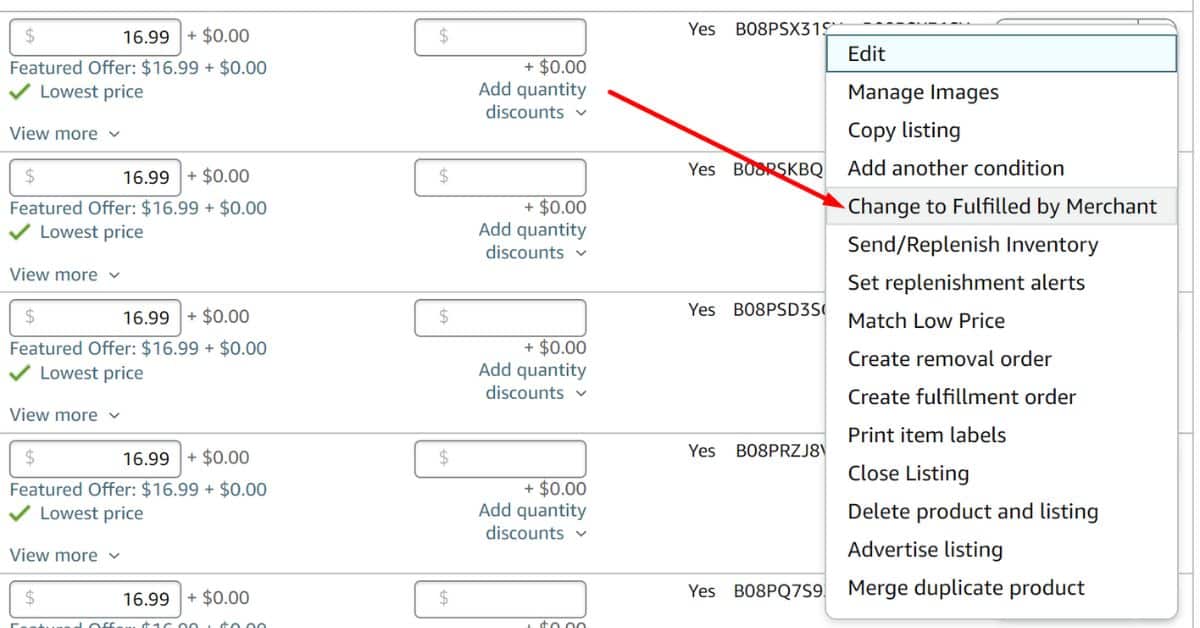
- How to switch from FBA to FBM is as simple as navigating to Manage All Inventory, hitting the drop-down arrow next to the Edit button on the right-hand side of the product and selecting “Change To Fulfilled By Merchant”.
- Switching from FBA to FBM can be a wise move for brands that meet certain criteria, but it can also be a significant setback.
- It’s important to understand if you’re a good fit to switch from FBA to FBM.
In over 10 years as an eCommerce Fractional CMO, Amazon Consultant, and eCommerce Marketing Consultant, not to mention CEO, I’ve seen just about every mistake and the lessons from them. That means you get all the learnings without the scars.
Switching from FBA to FBM is easy.
Here’s how…
How To Switch From FBA to FBM:
Step 1: From the main navigation, select Manage All Inventory
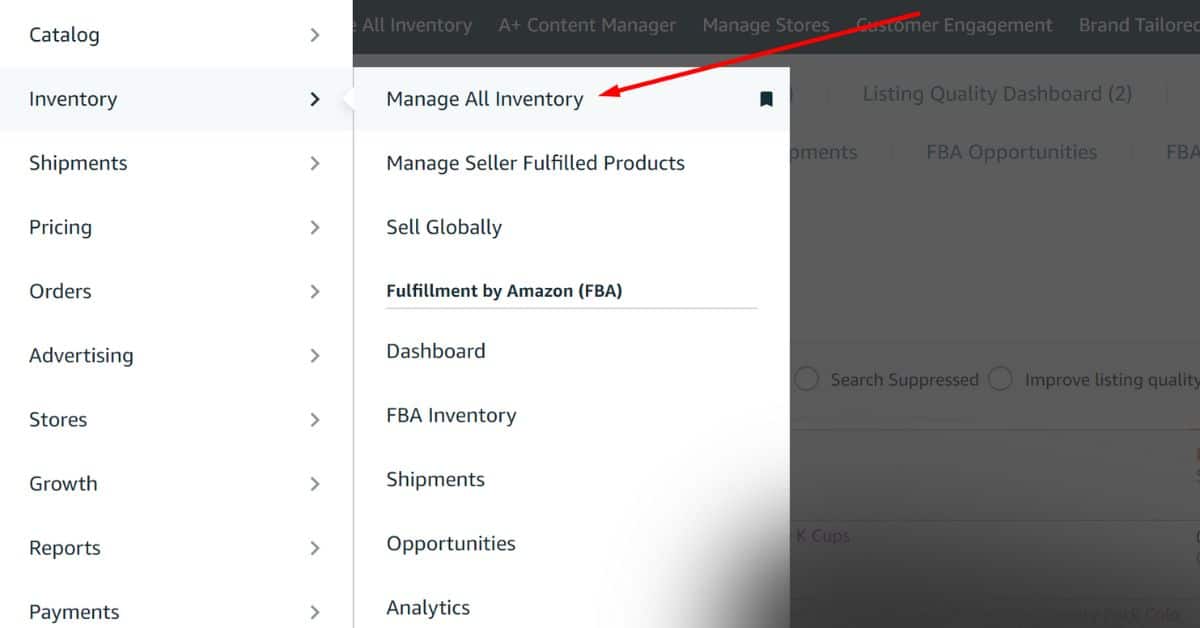
Step 2: Once you’ve located your product, on the far right, select the drop-down button next to Edit and choose “Change To Fulfilled By Merchant”.
That’s it, but if you were to exit this blog post now, you may be making a significant mistake.
This is because switching from FBA to FBM isn’t right for everyone.
Let’s have a look at who SHOULD switch from FBA to FBM.

Who SHOULD Switch From FBA to FBM
So, who should switch from FBA to FBM?
Amazon Sellers that should switch from FBA to FBM meet certain criteria.
Who SHOULD Switch From FBA to FBM:
- Sellers With Capabilities or a 3rd Party Logistics Partner That Can Meet & Exceed Seller Fulfilled Prime Criteria.
- Sellers Who Want To Use FBM ONLY When FBA Is Out of Inventory
- Sellers Who Are Aware of the Pros and Cons of Switching From FBA To FBM And Are Comfortable With The Cons
- Sellers Who Cannot Afford The FBA Fees In Their Margins
- Sellers Not Competing For A Buy Box With Other Sellers AND Comfortable With the Cons
That said, some sellers SHOULDN’T switch from FBA to FBM.

Who SHOULDN’T Switch From FBA to FBM
Switching from FBA to FBM isn’t always a good idea.
From plummeting visibility in Amazon product searches and Buy Box issues, you can invite more challenges into an already uphill battle.
Let’s take a look at Amazon Sellers who are not a good candidate to switch from FBA to FBM.
Who SHOULDN’T Switch From FBA to FBM:
- Sellers competing for the Buy Box.
- Sellers in competitive niches.
- If you do a search for your type of products and you only see listings at the top with Prime badges.
- Sellers who cannot meet and exceed the Seller Fulfilled Prime shipping requirements.
- Sellers without a logistics infrastructure or a 3PL.
- Sellers who can afford the margins with FBA fees factored in.
With that in mind, you may be wondering if you’re a fringe case or still aren’t sure if making the switch from FBA to FBM is right for you.
So, let’s take a look at the Pros & Cons.

Pros & Cons of Switching From FBA to FBM
To make an informed decision on switching from Amazon FBA to FBM, you’ll want to understand what you stand to lose.
Let’s break things down and evaluate the Pro’s & Con’s of switching from FBA to FBM.
| Pros (Why You Should) | Cons (Why You Shouldn’t) |
|---|---|
| Save on Amazon FBA Fees | More difficult to rank and win the Amazon Buy Box |
| Greater control over shipping | You must pick, pack, and ship products yourself |
| Custom branded packaging and customer experience | You handle all customer service |
| Avoid FBA storage limits | You are responsible for lost or damaged shipments |

Frequently Asked Questions
Should I Switch From FBA To FBM When My FBA Goes Out of Stock?
No, if you want to avoid going out of inventory and have the means to fulfill via FBM, you would create a 2nd SKU of the same ASIN, 1 as FBA and 1 as FBM fulfillment. Regularly switching fulfillment methods can lead to technical issues.
Is It Better To Sell FBA or FBM?
It’s better to sell FBA than FBM if you have room in your margins. Amazon’s algorithm favors FBA listings and customers favor the Prime badge. You’ll make up for in volume what you lose slightly in margin.
Can I Do FBM and FBA at The Same Time?
Yes, you would simply set up 2 SKU’s of the same ASIN, one FBA, and one FBM. The FBA SKU would have the Buy Box most of the time and the FBM SKU would kick in when the FBA SKU is low on inventory or out of inventory.
What is the Main Difference Between FBA and FBM?
The main difference between FBA and FBM is Amazon will store the inventory, fulfill the orders, and ship the products to your customers with FBA, with FBM you fulfill and ship the products to your customers.
Can You Switch From FBM Back To FBA?
Yes, you can change your fulfillment method on a SKU at any time.


![Seller Central vs Vendor Central [COMPARISON]](https://www.sourceapproach.com/wp-content/uploads/2026/02/Amazon-Seller-Central-vs-Amazon-Vendor-Central-The-Source-Approach-eCommerce-Fractional-CMO-Amazon-Consultant-eCommerce-Consultant.png)
![How To Drive External Traffic To Amazon Listings [GUIDE]](https://www.sourceapproach.com/wp-content/uploads/2025/07/How-To-Drive-External-Traffic-To-Amazon-Featured-Image-The-Source-Approach-Amazon-Consultant-eCommerce-Consultant-Fractional-CMO.png)

![Amazon Storefront Design Templates [EXAMPLES]](https://www.sourceapproach.com/wp-content/uploads/2023/11/Amazon-Storefront-Templates-Source-Approach-Amazon-Consultant-eCommerce-Consultant-Fractional-CMO.png)
![Amazon Product Images Best Practices [EXAMPLES]](https://www.sourceapproach.com/wp-content/uploads/2025/07/Amazon-Product-Images-Best-Practices-The-Source-Approach-Amazon-Consultant-eCommerce-Consultant-Fractional-CMO.png)